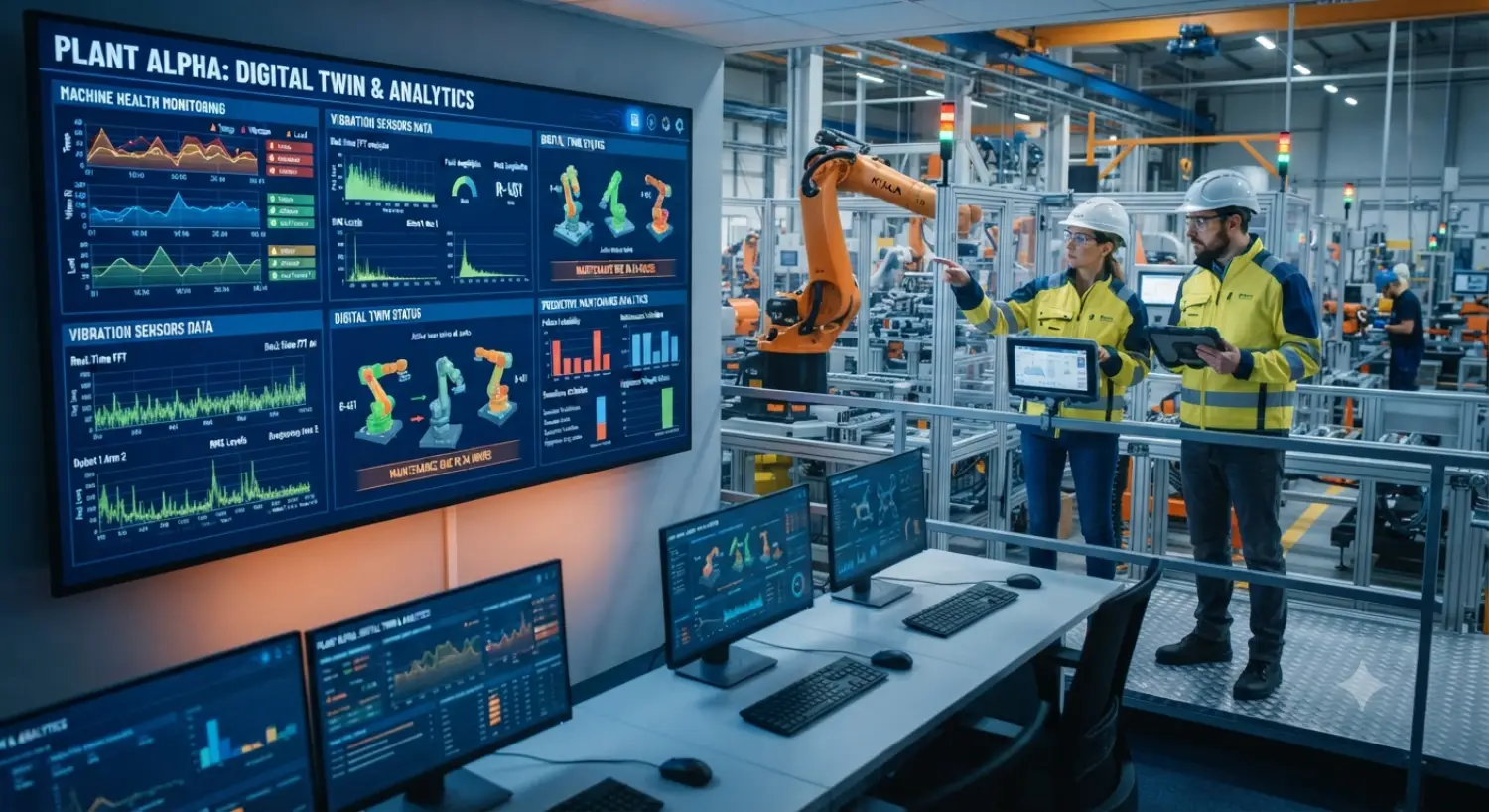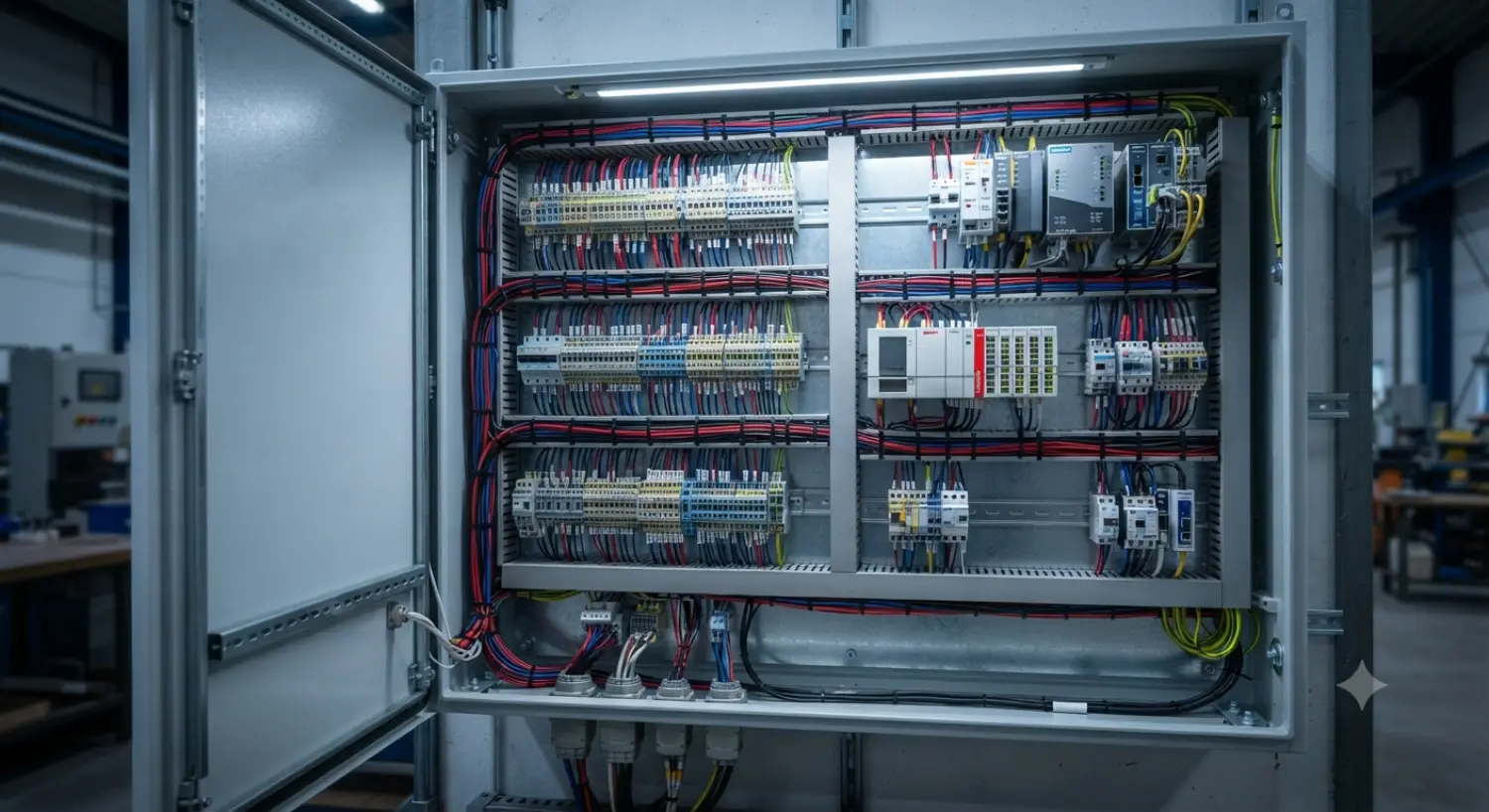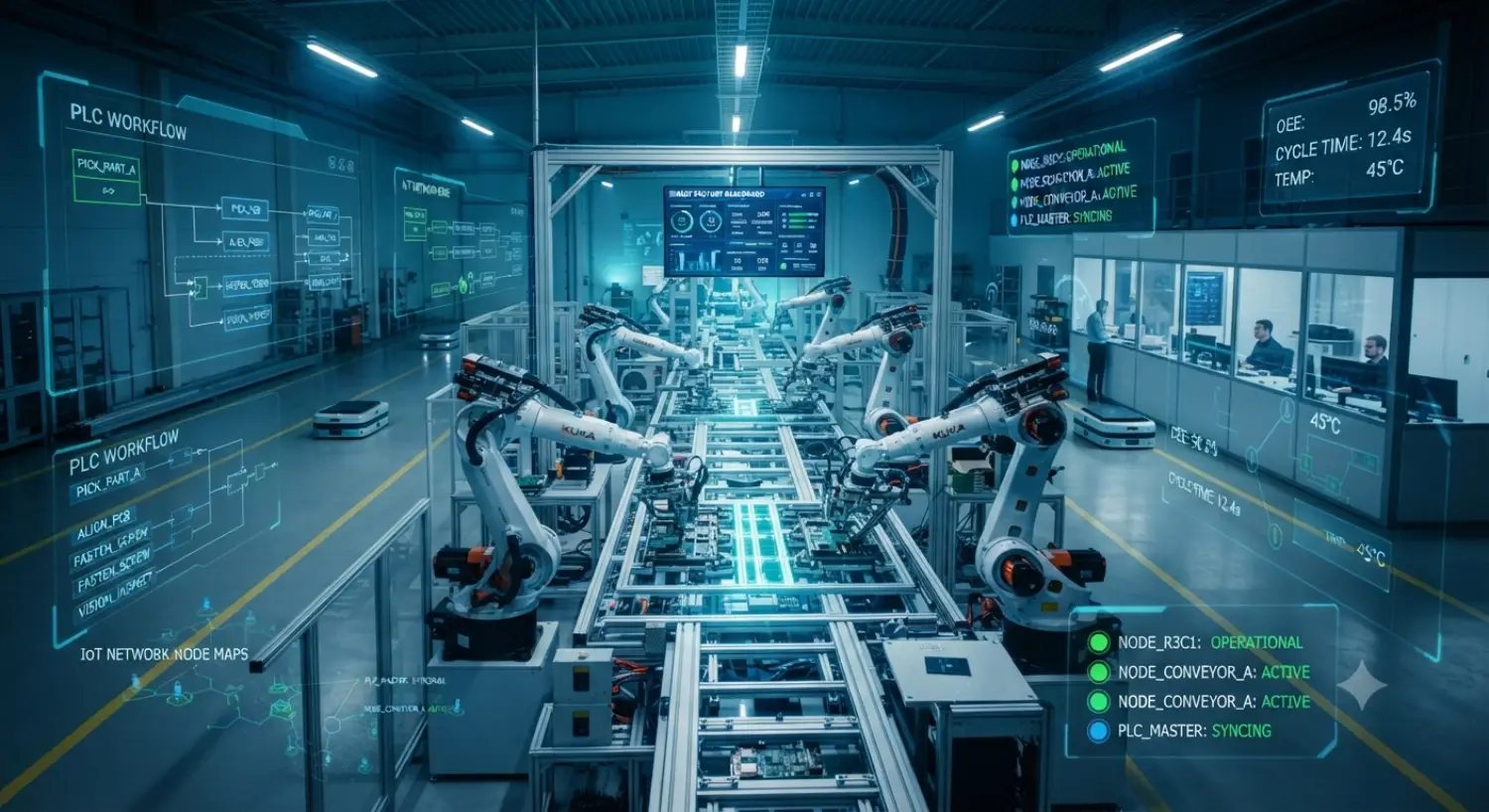
Industrial manufacturing is moving beyond traditional machine automation toward connected, data-driven and intelligent operations. Modern industrial automation combines PLCs, SCADA, industrial sensors, IIoT, industrial networking and advanced monitoring technologies to improve control, visibility and operational reliability.
For manufacturers, the objective is not simply to automate machines. It is to create reliable systems that can continuously monitor processes, identify abnormal conditions and provide useful information for better operational decisions.
What Is Industrial Automation?
Industrial automation uses control systems, sensors, instrumentation and software to monitor and control industrial processes with reduced manual intervention.
A typical automation architecture may include:
- Industrial sensors and instrumentation
- PLC controllers and I/O systems
- HMI and SCADA systems
- Industrial PCs
- Industrial communication networks
- IIoT and cloud platforms
- Condition monitoring systems
- Safety automation solutions
These technologies work together to provide real-time control and visibility across machines, production lines and industrial processes.
The Role of PLC and SCADA Systems
PLCs remain a fundamental part of industrial automation. They collect signals from field devices, execute control logic and communicate with other automation systems.
SCADA systems provide supervisory-level visibility by presenting process information, alarms, trends and equipment status to operators.
Together, PLC and SCADA systems provide a strong foundation for reliable industrial control and monitoring.
Smart Sensors and Real-Time Monitoring
Sensors form the connection between the physical process and the automation system.
Modern industrial facilities can monitor parameters such as:
- Temperature
- Pressure
- Flow
- Level
- Vibration
- Speed
- Position
- Equipment condition
Continuous monitoring helps identify abnormal operating conditions earlier and provides maintenance and operations teams with better visibility into equipment performance.
IIoT and Connected Industrial Systems
Industrial Internet of Things (IIoT) technologies extend traditional automation by connecting machines, sensors and industrial systems to data platforms.
This enables organisations to collect and analyse operational data across machines and facilities.
IIoT can support:
- Real-time equipment monitoring
- Remote visibility
- Condition monitoring
- Performance analysis
- Production data collection
- Predictive maintenance
- Energy monitoring
- Digital transformation initiatives
The value of IIoT comes from connecting operational data with practical business and maintenance decisions.
Condition Monitoring and Predictive Maintenance
Traditional maintenance approaches often rely on fixed schedules or corrective action after equipment failure.
Condition monitoring provides another approach by continuously observing equipment parameters such as vibration, temperature and other operating conditions.
When abnormal behaviour is identified, maintenance teams can investigate the equipment before the issue develops into a major failure.
This can support:
- Earlier fault detection
- Better maintenance planning
- Reduced unexpected interruptions
- Improved equipment reliability
- Better utilisation of maintenance resources
Predictive maintenance is increasingly being connected with sensors, PLCs, SCADA, IIoT and analytics platforms to create more data-driven maintenance processes.
Moving Towards Industry 4.0
Industry 4.0 brings automation, connectivity and data together to create smarter industrial operations.
A connected industrial environment may combine:
Sensors → PLC → HMI/SCADA → Industrial Network → IIoT Platform → Analytics
This architecture allows information generated at the machine level to become useful for operators, maintenance teams and management.
The transition does not always require replacing existing automation systems. Existing PLCs, sensors and control infrastructure can often form the foundation for further digitalisation and connectivity.
How Industrial Automation Benefits Manufacturers
A properly designed automation system can help manufacturers improve several areas of operation:
- Improved Process Visibility: Real-time information helps operators understand current process and equipment conditions.
- Better Equipment Reliability: Continuous monitoring can help identify abnormal conditions before they become major equipment problems.
- Reduced Downtime: Early detection and better maintenance planning can help reduce unexpected production interruptions.
- Improved Safety: Safety sensors, controllers and monitoring systems can help identify hazardous operating conditions and support appropriate safety responses.
- Better Data for Decision-Making: Connected automation systems provide structured operational data for analysis, reporting and continuous improvement.
- Building a Practical Automation Strategy: Successful automation is not only about selecting new technology. It requires understanding the actual production requirement and designing an appropriate system architecture.
A practical approach is to:
- Identify critical machines and processes.
- Define the key parameters that need to be monitored.
- Select appropriate sensors and instrumentation.
- Integrate field devices with PLC and control systems.
- Establish HMI and SCADA visibility.
- Connect relevant operational data through industrial networks.
- Introduce IIoT, condition monitoring or analytics where they provide measurable value.
- Continuously improve the system based on operational data.
Conclusion
Industrial automation is evolving from isolated machine control toward connected and intelligent industrial systems.
PLCs, SCADA, sensors, IIoT, condition monitoring and industrial networking each play an important role in this transformation. When these technologies are properly integrated, manufacturers can gain better process visibility, improve equipment reliability and build a stronger foundation for Industry 4.0.
High Trust Solutions provides industrial automation and digital transformation solutions covering industrial sensors, PLC and I/O systems, HMI, SCADA, IIoT, condition monitoring and intelligent automation applications for industrial environments.